🔑 A Key Shift: AI as a Tool vs. AI as a Partner
Get insights like this every week
Subscribe to Innovation Insights Newsletter for concise briefings on leadership, AI, and innovation.
Three fundamental shifts are reshaping how leaders navigate the intersection of human capability and artificial intelligence, and the companies getting this balance right are pulling ahead fast:
- ⚡ The Strategic Shift: How AI stopped being just a tool and became a partner
- 👑 Leading Through Change: How today's leaders navigate ethics, culture, and decision-making when AI is part of the equation
- 🧠 The Human Edge: Which skills become more valuable as AI handles routine work
Read time: less than 5 minutes 👇
AI Leadership: Decision-Making, Ethics, and Culture in an AI-Driven World
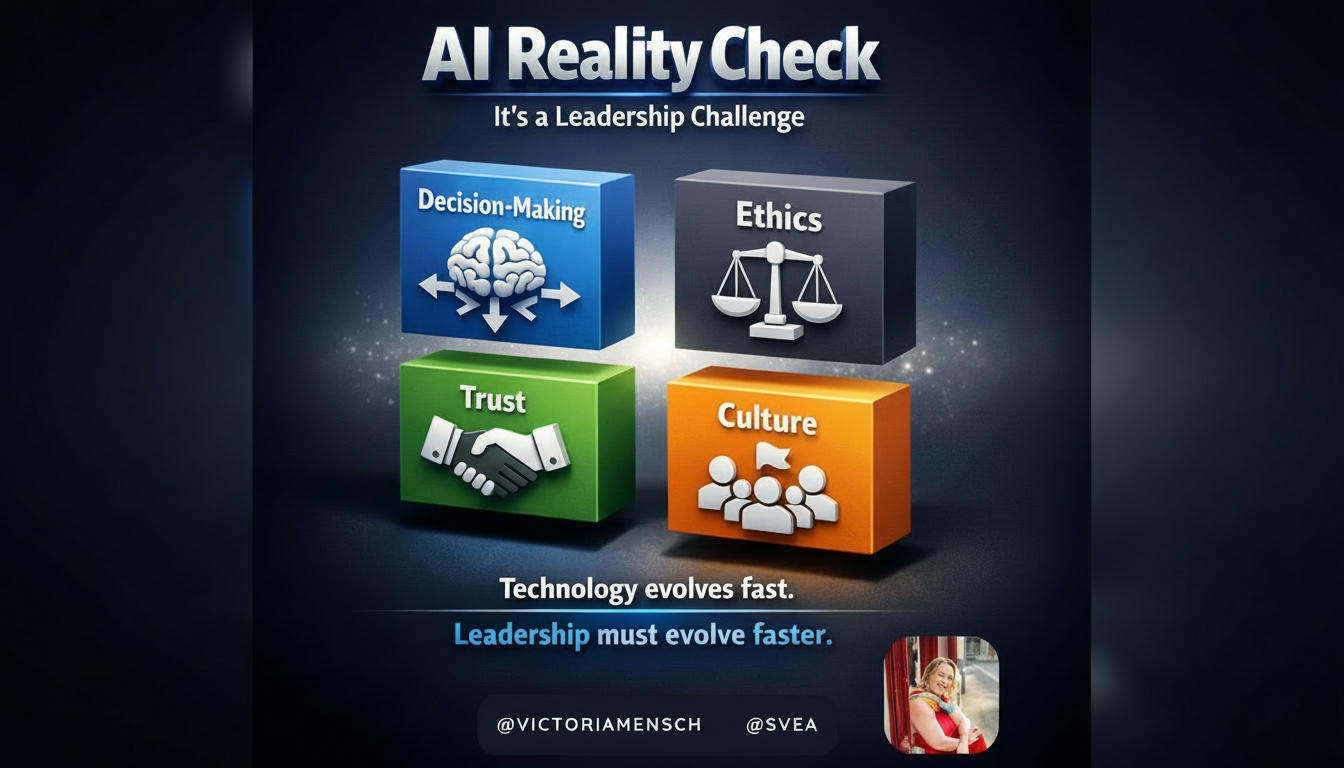
AI leadership isn't about having the latest technology—it's about making better decisions when everything around you is changing fast. The real challenge lies in restructuring how organizations operate, not just adopting new tools.
Key Points:
- Focus decision-making on the small set of choices that actually drive value and manage risk
- Assign clear ownership across departments to break down organizational silos
- Redesign processes to support faster, horizontal decision-making flows
- Apply governance based on decision impact rather than blanket policies everywhere
Why It Matters: Organizations that restructure their decision-making processes will outperform those that simply add AI tools to broken systems.
Source: Victoria Mensch on LinkedIn
Technology's Evolution From Tool to Strategic Partner

The way leaders view technology—as a simple tool versus an active organizational role—fundamentally reshapes how companies operate, collaborate, and compete. Research comparing two similar billion-dollar Chinese platform companies reveals that this single mindset shift creates dramatically different organizational outcomes.
Key Points:
- T Company treated technology as a tool to digitize existing processes, maintaining traditional hierarchical structures and sequential approval workflows
- R Company positioned technology as an independent "role," creating a central AI-driven "brain" that functions as a middle manager and strategic coordinator
- The "tool" approach led to information decay, bureaucratic delays, and predominantly human-to-human interactions that limit scalability
- The "role" approach enabled flatter structures, networked collaboration, and human-to-machine interactions that create one-to-many operational efficiency
Why It Matters: Companies that integrate technology as an organizational role—not just a productivity tool—achieve flatter hierarchies, faster decision-making, and scalable growth advantages over traditional competitors.
Source: Harvard Business Review
Developing Critical Human Skills Amid AI Integration
AI is rapidly transforming the workplace, creating what experts call a "skills collapse" as automation handles routine tasks that once helped employees develop fundamental capabilities. Organizations must now intentionally cultivate human skills like critical thinking, curiosity, and judgment to maintain competitive advantage.
Key Points:
- PwC implements "The Pause" technique, training employees to step back and critically evaluate AI output before acting on potentially biased or inaccurate information
- New hires receive immersive AI + Human Skills training using real client work, customized by service lines to build practical daily-use capabilities
- Apprenticeship culture connects professionals with hands-on learning experiences while pursuing higher education, ensuring automation doesn't eliminate core skill development
- Leaders coach in real-time and model reflective judgment behaviors, creating ripple effects that encourage teams to build critical thinking habits
Why It Matters: Companies that strategically develop human skills alongside AI adoption will build workforce confidence, reduce technology hesitation, and maintain the contextual problem-solving abilities that drive business success.
Source: HR Executive
Assertive Communication Transforms Professional Relationships

Assertive communication transforms workplace dynamics by respecting both your needs and others' boundaries. This balanced approach differs sharply from aggressive tactics that alienate colleagues or passive behavior that leaves your requirements unmet.
Key Points:
- Assertive professionals experience fewer conflicts and build stronger support networks that aid career advancement
- Use "I" statements to express concerns without assigning blame, such as "I feel overwhelmed when deadlines change without notice"
- Passive-aggressive behavior sends mixed signals that damage professional relationships and team cohesion
- Self-assessment reveals communication patterns through questions like "Do I avoid sharing opinions to keep peace?"
Why It Matters: Mastering assertive communication directly correlates with higher self-esteem, reduced workplace stress, and more effective leadership presence.
Source: Verywell Mind