⚡Google just changed their AI strategy — and what gets disrupted next
The corporate world is experiencing a seismic shift as three major forces converge to reshape how we work and organize businesses—but the real story lies in what companies aren't telling their employees about these changes:
- ⏰ The Death of 9-to-5: Why the traditional workday structure is crumbling faster than anyone predicted
- 🏢 AI's Secret Revolution: How artificial intelligence is quietly restructuring entire organizations from the inside out
- 🔄 Google's Surprising Retreat: The tech giant's unexpected AI strategy pivot reveals a troubling trend in automation adoption
Read time: less than 4 minutes 👇
Strategic Foundations for AI Adoption | SVEA
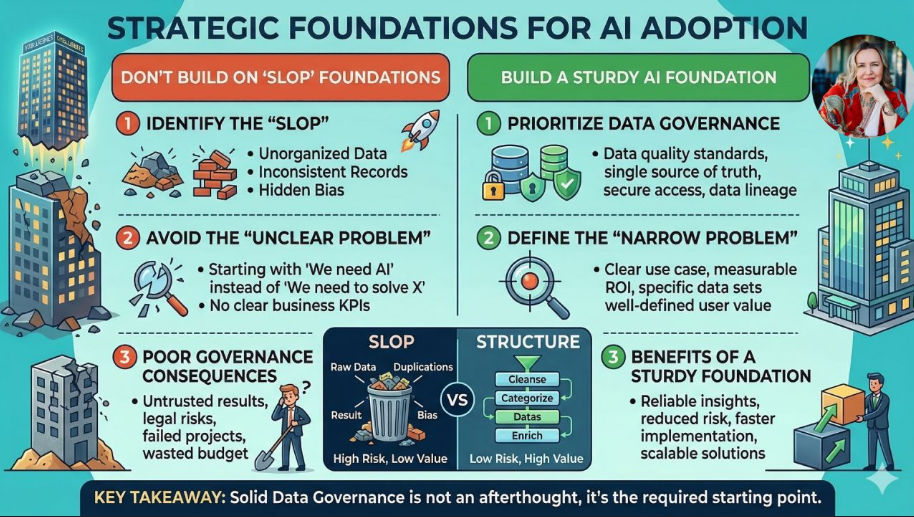
Nearly 80% of AI projects crashed and burned this year, and it's not because the technology is broken. Companies are rushing to build sophisticated AI systems without solving the fundamental problem: they don't know what business challenge they're actually trying to fix.
Key Points:
- AI projects fail at twice the rate of regular IT initiatives, with 80% ending in disappointment
- Success requires focusing on one specific problem instead of trying to automate everything at once
- Poor data quality and lack of preparation kill more projects than technical limitations
- Companies need solid infrastructure before layering on intelligent systems
Why It Matters: Your innovation budget could be funding your competitors' success instead of your own transformation.
Source: svexecutive.academy
Traditional 9-to-5 Work Model Faces Disruption
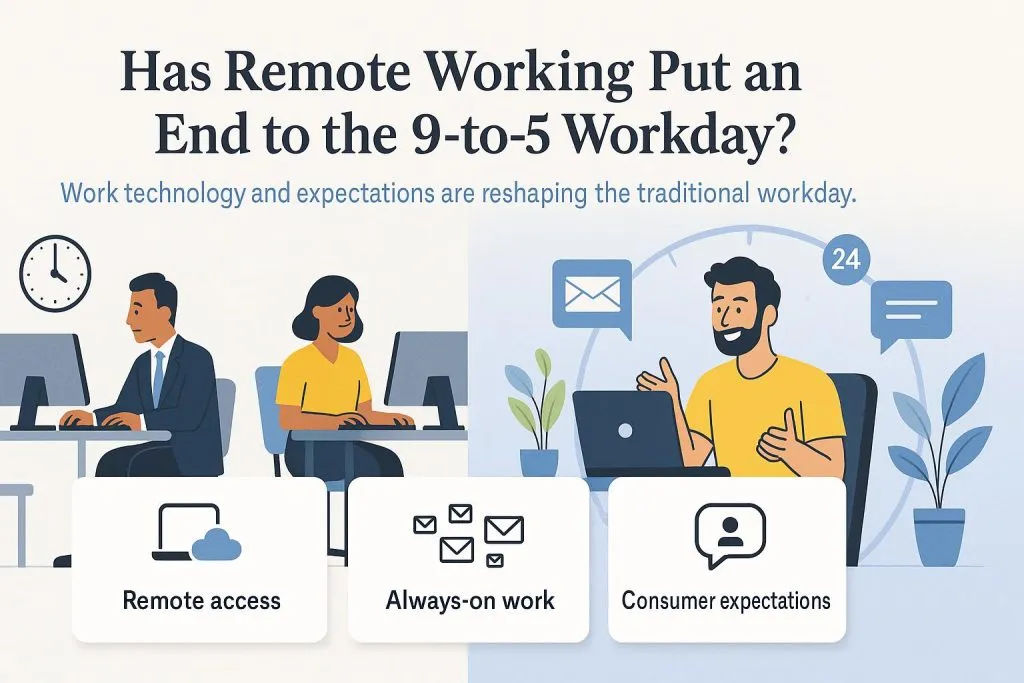
Picture a workplace where rigid schedules give way to structured flexibility, where productivity matters more than presence, and where work is designed around outcomes rather than fixed hours. The traditional 9-to-5 is being replaced by models that better reflect how people perform and how modern organizations operate.
Key Points:
- 45% of full-time employees now work remotely at least part-time, accelerating the shift away from fixed daily schedules
- Flexible scheduling and hybrid work (typically 2–3 in-office days) allow employees to align work with peak productivity rather than standard hours
- The 4-day workweek is gaining traction, through compressed schedules (4×10) or reduced-hour models (32-hour weeks)
- Asynchronous work is reducing reliance on meetings, with teams using shared documents and delayed communication instead of real-time coordination
- Results-only and "follow-the-sun" models prioritize output and enable continuous global operations without extending individual workdays
Why It Matters: Organizations that intentionally redesign how work gets done—rather than defaulting to legacy schedules—will attract top talent and operate more effectively. The advantage now lies in aligning work structures with real productivity, not outdated time blocks.
Source: business.com
AI Transforms Company Architecture Beyond Simple Efficiency
We've spent two years obsessing over AI productivity gains and efficiency metrics, but we're missing the real revolution. AI fundamentally changes how much work a small team can accomplish, challenging the century-old assumption that growth requires more people.
Key Points:
- Traditional scale relied on adding more employees, managers, and specialized roles to handle complexity
- AI enables dramatic output increases without proportional workforce expansion
- Companies treating AI as operational optimization miss the structural transformation
- The minimum viable organization size is shrinking across industries
Why It Matters: Organizations that recognize this shift can build leaner, more agile structures while competitors remain trapped in outdated workforce models.
Source: fastcompany.com
Google Pivots AI Strategy After Agent Adoption Disappoints

Google has quietly shifted away from Project Mariner, its browser-based AI agent, as the tech industry pivots toward more powerful coding agents. The move reflects a broader industry realization that command-line agents outperform web browsers for automating complex tasks.
Key Points:
- Browser agents from Google, OpenAI, and Perplexity have struggled with adoption, reaching only millions of users compared to ChatGPT's hundreds of millions
- Command-line coding agents prove 10-100 times more efficient than browser agents that rely on processing screenshots
- New video-based computer models show promise, with one startup demonstrating autonomous driving capabilities in San Francisco
- Companies now view coding agents as better general-purpose tools, capable of creating custom software solutions for everyday tasks like budgeting
Why It Matters: This strategic shift positions coding agents as the foundation for the next generation of AI assistants that can handle both technical and consumer applications with greater reliability and speed.
Source: wired.com