Gen Z is disappearing from tech companies — as the risk of institutional stagnation increases
Get insights like this every week
Subscribe to Innovation Insights Newsletter for concise briefings on leadership, AI, and innovation.
The innovation velocity gap is widening. Organizations are racing to move faster — deploying AI, scaling teams, closing deals — while the judgment infrastructure that makes velocity sustainable simply doesn't exist. A pattern is emerging: the gap between what organizations can do and what they've built to sustain it is becoming the real transformation barrier. Not capability. Not speed. Judgment infrastructure.
- 🔥 The Talent Exodus: Why Gen Z's disappearance from tech workforces reveals the hidden cost of automating away institutional challenge
- 💸 The $14 Billion Question: What OpenAI's explosive growth and catastrophic burn rate expose about velocity without viable economics
- ⏳ The Ten-Year Mistake: Why 46% of M&A deals get quietly unwound — and what executives optimize for instead of integration success
- 🔄 What Actually Works: Why companies that track failed experiments move faster than those that just "fail fast"
Read time: 6 minutes 👇
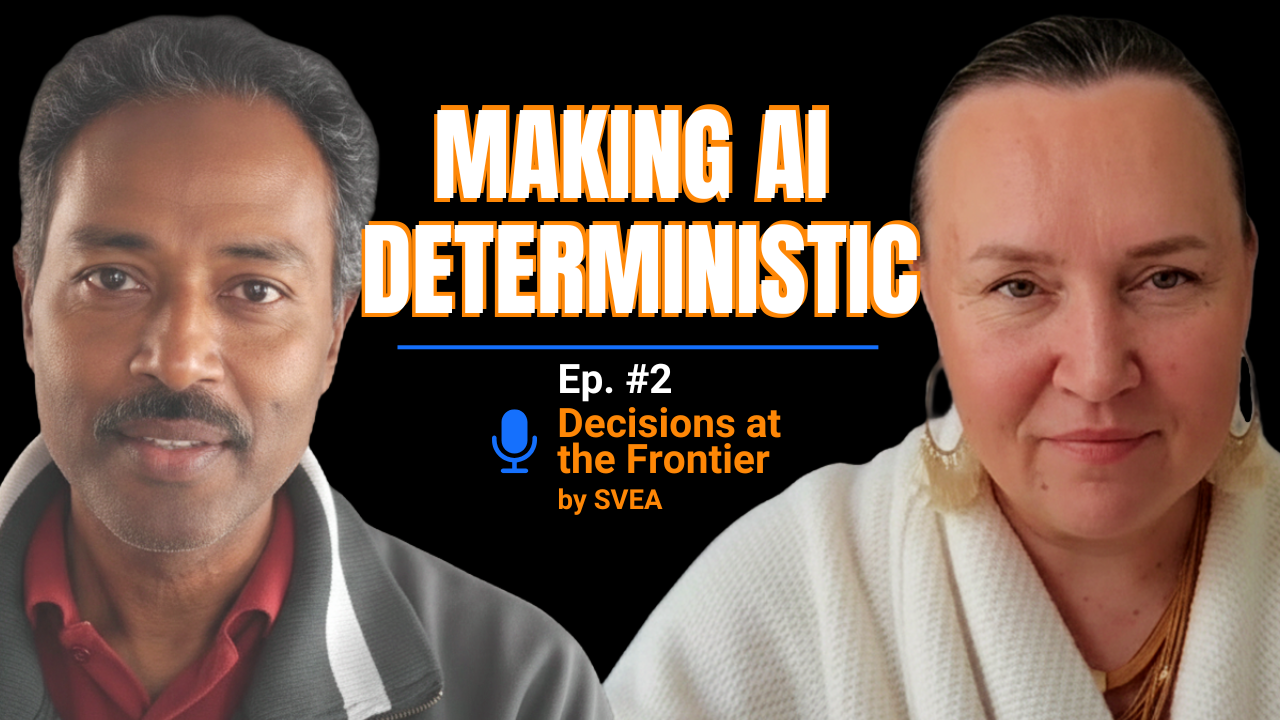
Making AI Deterministic — A Conversation with Harish Epuri, Former VP of Engineering at Autodesk
Watch the full conversation now ↗
Most enterprise AI conversations still focus on capability. The harder question is what it takes to make AI reliable enough for real organizational decision-making.
In Episode 2 of Decisions at the Frontier — Live, Dr. Victoria Mensch sits down with Harish Epuri, former VP of Engineering at Autodesk, for a candid discussion on why successful AI transformation depends less on forcing adoption and more on building trust, accountability, and environments where experimentation can scale responsibly.
The conversation explores:
- Why enterprise AI initiatives struggle to scale
- The difference between deterministic automation and probabilistic AI
- Why trust becomes the foundation of adoption
- How leaders reduce uncertainty while still moving quickly
For leaders navigating AI implementation, this conversation reframes what operational readiness actually means.
The Talent Exodus: Gen Z Has Disappeared from Tech's Workforce
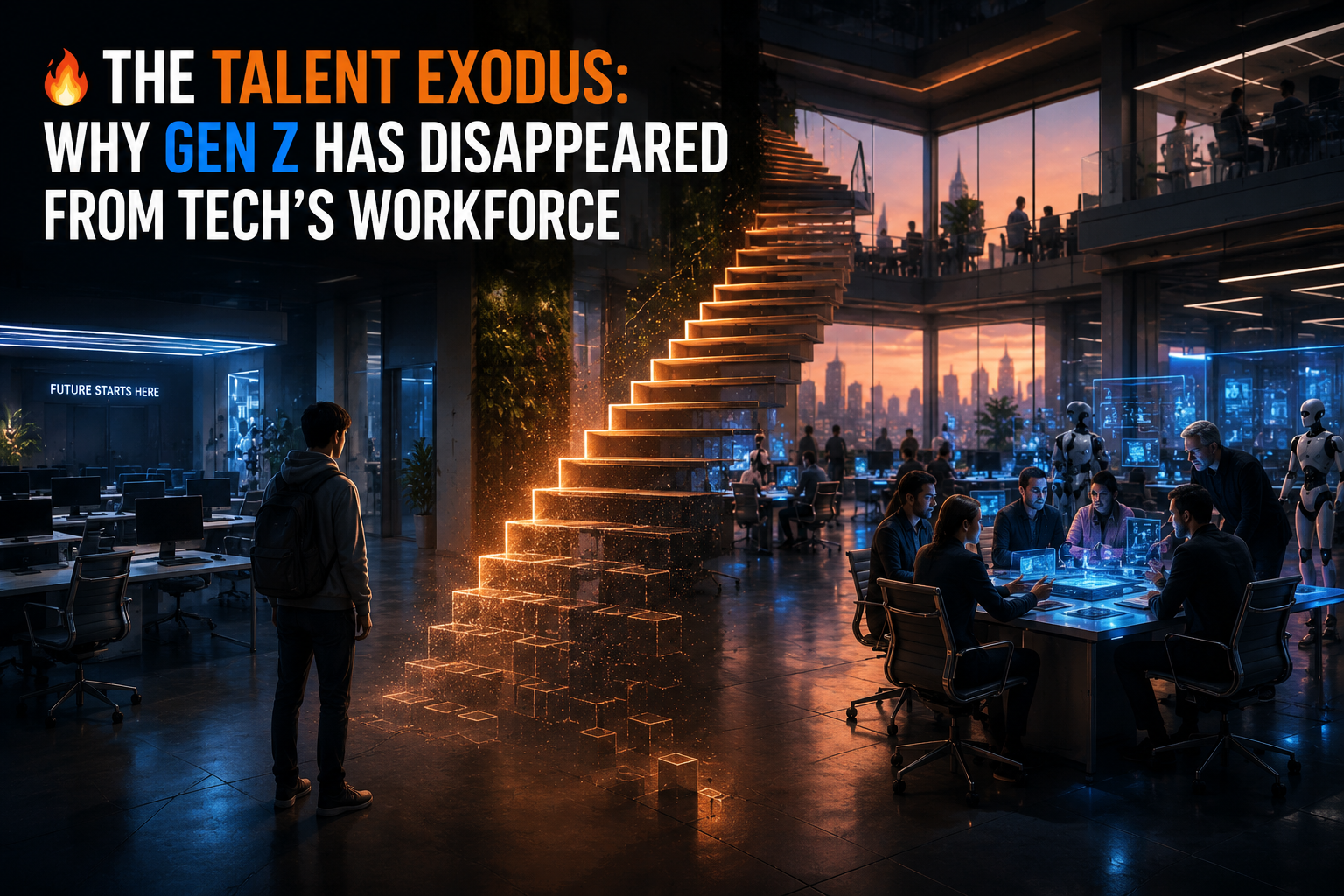
Between January 2023 and August 2025, Gen Z's representation at large public tech companies dropped from 15% to just 6.8% — cut by more than half in less than three years.
The same pattern hit private tech companies, where young workers virtually vanished from the pipeline as entry-level jobs dwindled because of AI agents and companies automated roles from the bottom up.
The average age at tech companies has risen by 5 years. Companies are systematically cutting junior roles while celebrating their commitment to innovation.
This creates a paradox that exposes something executives aren't confronting: you can't build innovative cultures by eliminating the people who challenge existing assumptions.
Entry-level roles aren't just about filling seats. They're the organizational mechanism that forces companies to question whether their processes still make sense. Junior employees ask "why do we do it this way?" — not because they're naive, but because they haven't been conditioned to accept dysfunction as normal.
When companies automate those roles away, they're not just cutting costs. They're removing the institutional pressure to stay adaptable.
Looking 10 or 20 years ahead, when tech companies' current millennial workers progress toward senior roles, the question becomes: who will take over their mid-level jobs? If Gen Z doesn't have the opportunity to learn from the bottom-up, there's a major issue of stifled innovation and a lack of talent ready to step into those positions.
Why It Matters: The most effective tech leaders understand that innovation isn't about having the smartest people in the room — it's about creating environments where different perspectives collide. When you eliminate entry-level talent, you don't just lose bodies. You lose the cognitive diversity that prevents institutional calcification. Companies claiming they're becoming more innovative while systematically removing the youngest voices are performing innovation, not practicing it.
The $14 Billion Question: When Explosive Growth Becomes an Expensive Show
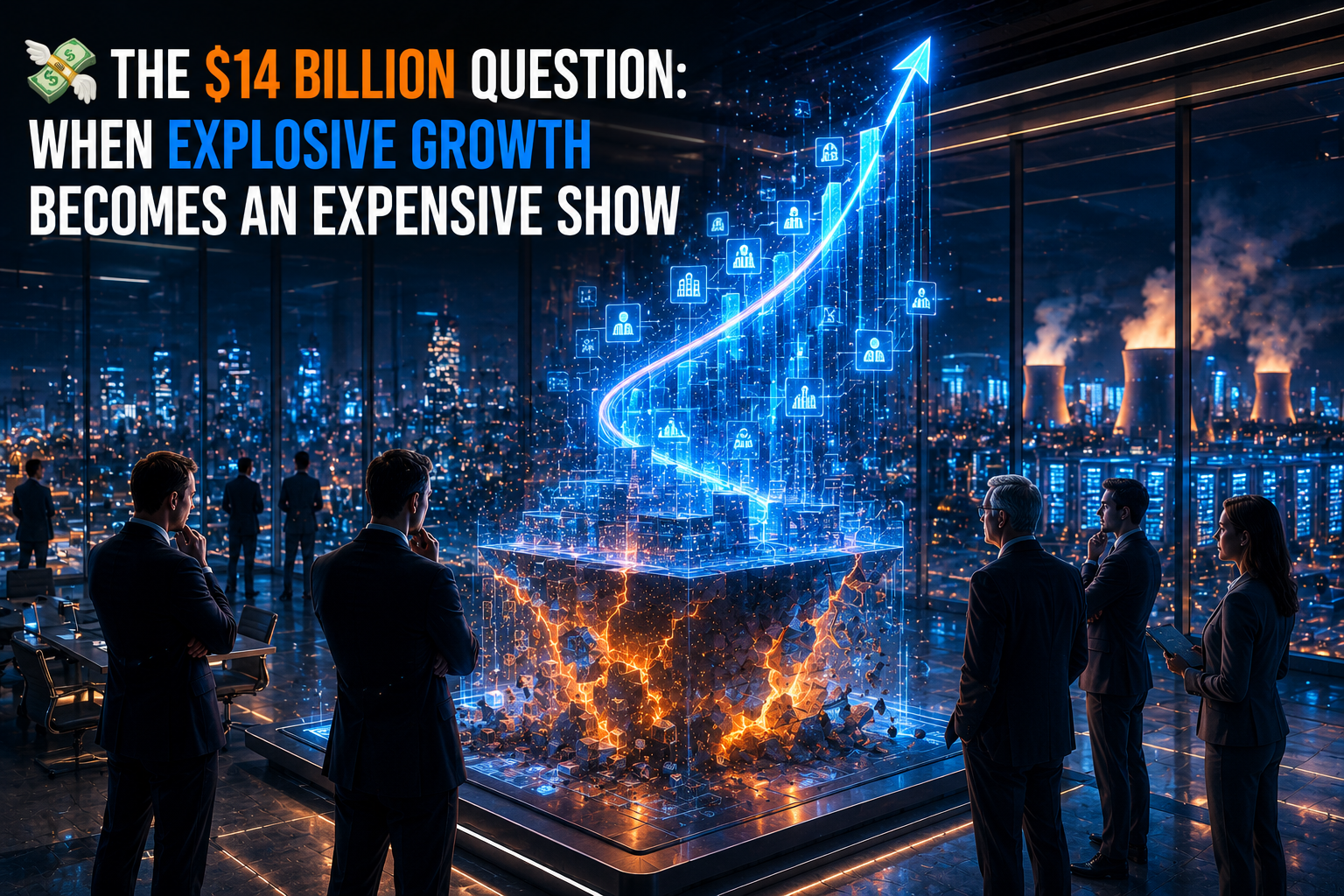
OpenAI hit $20 billion in annual recurring revenue in 2025 — a 10x increase from the $2 billion recorded in 2023. ChatGPT became the fastest-growing enterprise platform in history, with 7 million paid workplace seats and over 1 million companies paying for enterprise-grade AI products.
The growth is unprecedented. But here's what the headlines don't tell you: OpenAI projects a $14 billion loss in 2026 — roughly three times worse than estimates for 2025.
The company generated $13.1 billion in full-year revenue in 2025 and spent approximately $22 billion to do so. That means OpenAI spent $1.69 for every dollar it earned — before considering the billions more required for R&D, infrastructure expansion, and the compute capacity needed to train next-generation models.
Internal projections show OpenAI expects cumulative losses of $115 billion to $143 billion before reaching profitability sometime between 2029 and 2030. The company's own forecasts acknowledge losses will persist even as revenues continue growing explosively.
This isn't strategic patience. This is the opposite — a bet that dominance today justifies unsustainable burn rates tomorrow.
Compare this to competitor Anthropic, which also burns cash but with fundamentally different unit economics. Anthropic focused on enterprise customers from day one, where margins are better. Their forecasts show cash burn dropping to roughly one-third of revenue in 2026 and down to 9% by 2027 — expecting to break even by 2028.
OpenAI, by contrast, chased consumer scale where margins are terrible. Their burn rate is expected to remain at 57% of revenue through 2027. The company will burn through roughly 14 times as much cash as Anthropic before turning a profit.
Why It Matters: Silicon Valley's most effective leaders are discovering that sustainable innovation isn't about maximizing growth velocity — it's about knowing when velocity without viable unit economics becomes performance theater. OpenAI's trajectory exposes the danger of mistaking momentum for progress: tools roll out, users multiply, headlines celebrate record growth, but the fundamental business model remains structurally unprofitable. The organizations building for endurance aren't the ones with the most explosive growth curves. They're the ones who asked whether their economics actually work before scaling to billions in revenue.
The Ten-Year Mistake: Why Nearly Half of All Acquisitions Get Quietly Undone
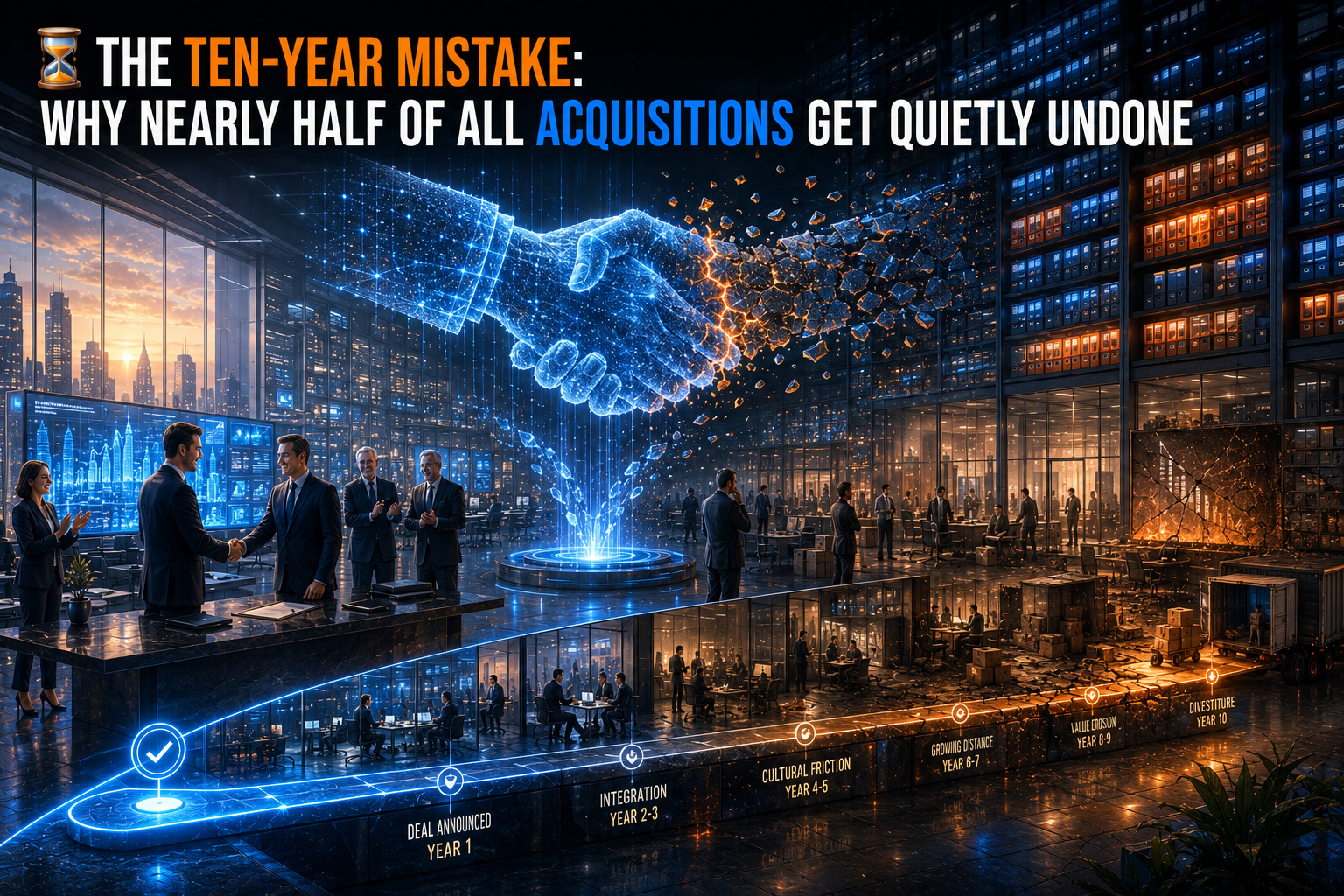
MIT Sloan Management Review's analysis of thousands of deals made by S&P 500 companies over 25 years reveals a pattern most executives don't discuss: 46% of all M&A deals are ultimately undone. These aren't quick failures — the average time from acquisition to divestiture is a full decade. Companies announce the deal, integrate the operations, issue press releases about synergies, then quietly sell off the acquired business years later when no one's paying attention.
Bayer's $63 billion acquisition of Monsanto erased over $50 billion in shareholder value. Kraft Heinz generated $28 billion in write-downs, with Warren Buffett acknowledging "we overpaid for Kraft." Microsoft's $7.2 billion Nokia acquisition resulted in a $7.6 billion impairment just one year later.
The research identifies the pattern: executives focus heavily on financial forecasts and strategic rationale while underweighting integration complexity and cultural friction. Kraft's brand-centric culture clashed with 3G Capital's cost-cutting model, choking innovation. Daimler-Chrysler struggled to reconcile German formality with American entrepreneurialism and unwound in less than a decade. The 2025 deal environment shows companies haven't learned — U.S. M&A deal volume reached $2.3 trillion in 2025, up 49% from 2024, with executives rushing to close deals while "the current window remains favorable."
Why It Matters: Executives optimize for deal closure, not integration success. By the time the divestiture happens a decade later, the team that championed the deal has moved on. The companies getting M&A right aren't the ones with better financial models — they're asking harder questions upfront: Can we actually integrate this, or are we buying a culture we'll destroy?
Why Companies That Track Failed Experiments Move Faster Than Those That Just "Fail Fast"
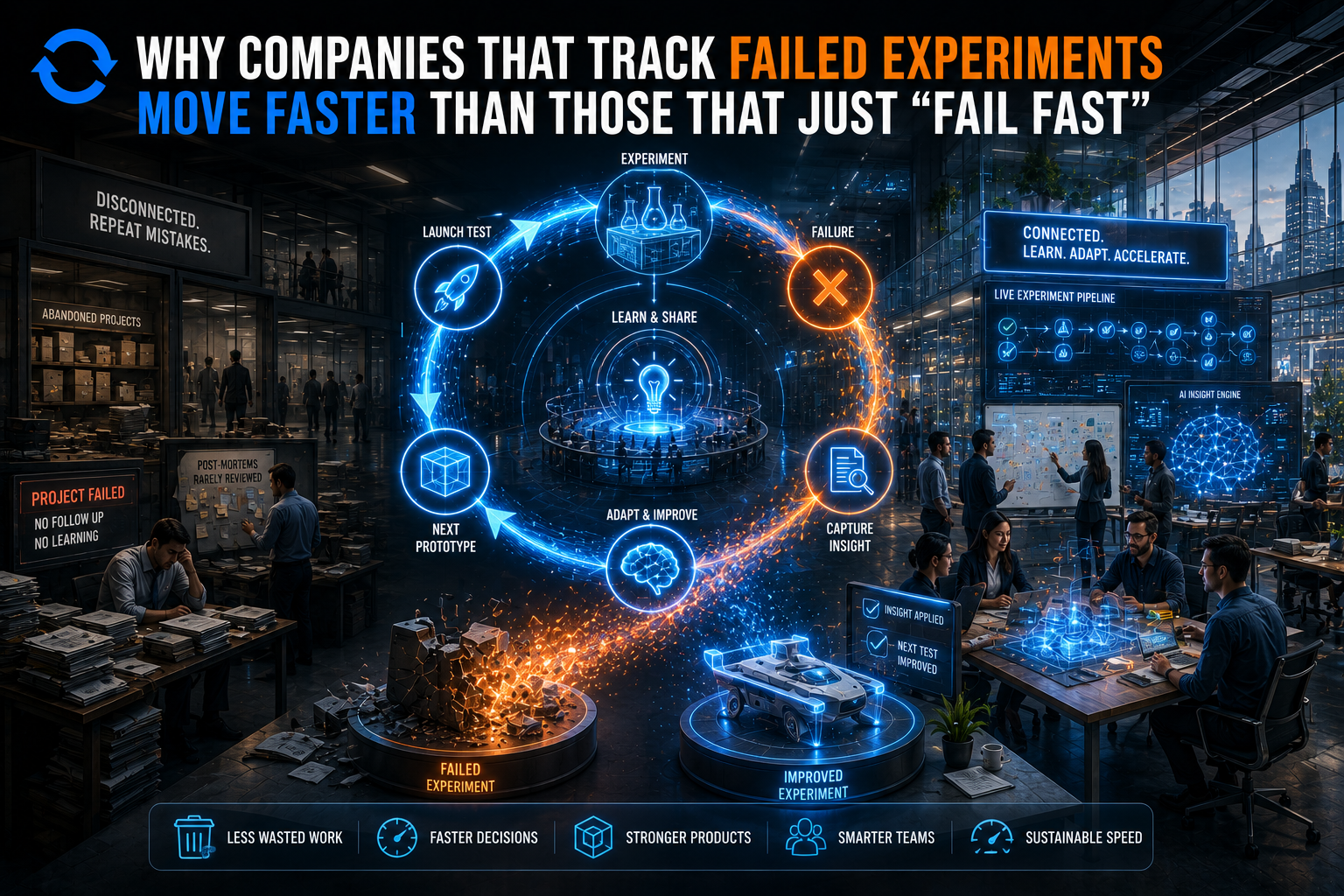
Everyone talks about "failing fast." But the companies actually moving quickly don't just accept failure. They've built systems to learn from it.
The difference is operational. Organizations that track what they learn from failures reduce wasted work by 40% or more. They measure how fast a failed test changes the next decision.
Teams at Spotify and Airbnb run 10-day "insight-to-prototype" sprints. When an experiment fails, the lesson goes straight into the next sprint. Speed doesn't come from moving recklessly — it comes from not repeating mistakes.
Entrepreneurs who've failed before raise money more easily than first-timers. Investors aren't rewarding failure — they're paying for pattern recognition that prevents expensive repeats.
AI companies achieve 2-3x faster iteration cycles not because they have better tools, but because every failed test automatically feeds into the next one.
Most companies treat post-mortems as optional. Fast companies treat them as required.
Why It Matters: "Fail fast" without capturing lessons just means failing repeatedly. The fastest organizations built systems so failed experiments immediately change what happens next. Speed comes from not relearning what you already paid to discover.
The Shift That Matters
Gen Z's vanishing from tech. OpenAI's $14 billion loss despite explosive growth. Half of all acquisitions quietly unwound. These aren't isolated mistakes — they reveal the same pattern: organizations optimizing for speed without asking whether they can sustain what happens when they move that fast.
The most effective leaders aren't moving fastest. They're asking different questions: Can we actually learn from what breaks? Can we integrate what we acquire? Are we building systems that make velocity sustainable, or just performing innovation until something collapses?
That's the shift. From velocity as theater to velocity as capability.