🤝 What Matters in AI Leadership: Communication, Alignment, Ownership
Everyone's talking about AI transformation, but few are focused on the human infrastructure that actually makes it work. Behind the demos and dashboards, three critical shifts are reshaping how organizations lead, align, and deliver value: executive communication, cross-functional clarity, and ownership of decisions that move beyond the pilot phase.
- 🚀 The AI Reality Check: Why most companies are stuck between promising pilots and actual production
- 🤝 The C-Suite Alliance: How top executives are finally aligning on what performance really means
- 📢 The Communication Revolution: Why the way leaders speak is becoming their most powerful tool
- 🧩 From Insight to Action: Why AI only works when someone owns the decision
From Pilots to Production: The Real AI Deployment Gap
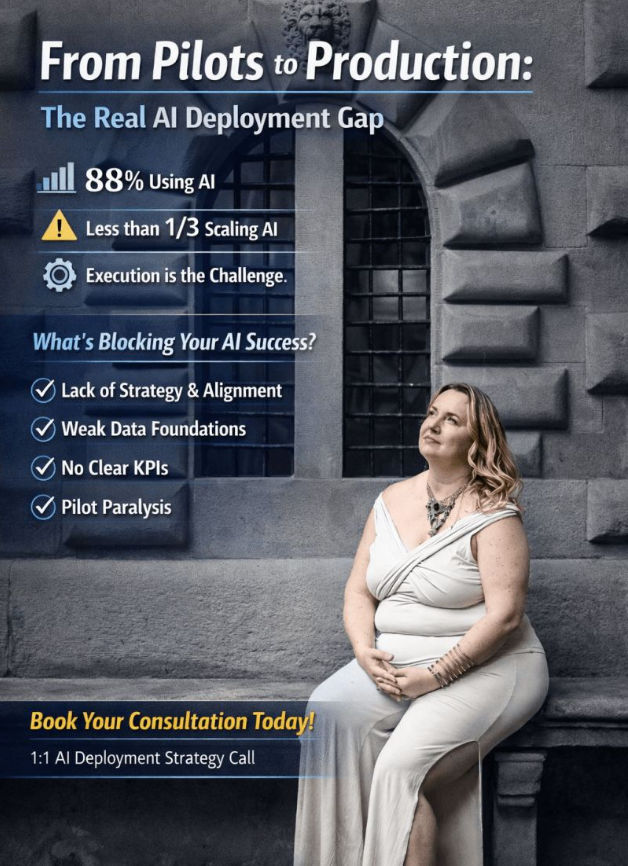
Most companies have started experimenting with AI, but very few have successfully moved beyond small pilot programs to achieve real business impact. The problem isn't the technology itself—it's the lack of proper execution architecture to scale AI across the entire organization.
- 88% of companies use AI in at least one function, but less than one-third have scaled it enterprise-wide
- Success requires strong data foundations, clear governance, and KPIs tied directly to business outcomes
- The biggest barriers are unclear ownership, missing governance structures, and lack of measurable results
- Executive teams need execution discipline rather than flashy AI demos to drive real transformation
Why It Matters: Organizations that master the shift from AI experimentation to production-ready systems will gain significant competitive advantages while others remain stuck in pilot purgatory.
CEOs and CHROs Find Common Ground in Performance

The traditional tension between CEO performance demands and CHRO well-being initiatives is creating workplace friction, but new research shows these priorities can align. Companies are finding ways to balance short-term execution with long-term employee health through strategic collaboration.
- CEOs drive performance through strict metrics and accountability structures, while CHROs focus on mental health programs and flexible work policies
- Major misalignment occurs around timeline expectations, with CEOs prioritizing immediate results versus CHROs investing in long-term wellness outcomes
- Successful organizations integrate shared KPIs that measure both productivity and employee satisfaction simultaneously
- Strategic alignment requires CEOs and CHROs to redesign workflows that leverage technology while maintaining human-centered approaches
Why It Matters: Organizations that successfully merge performance goals with well-being strategies create sustainable competitive advantages while reducing the 90% of employees who report deteriorating work conditions.
Read more at huntscanlon.com →
Executive Communicators Shape Modern Leadership

The modern executive landscape has transformed dramatically. Leadership visibility and communication prowess have become as important as traditional business acumen, creating demand for a new type of strategic partner.
- Leadership and social influence skills jumped 22 points in importance over two years, now ranking third-most critical according to the World Economic Forum
- Executive attention has become corporate currency, with leader visibility directly translating into measurable brand authority and organizational trust
- The executive communicator role fills the gap between traditional PR teams and personal leadership needs
- AI accelerates content creation and testing, but human judgment remains essential for high-stakes executive communication
Why It Matters: When integrated properly, executive communicators become indispensable extensions of leadership that transform how executives influence stakeholders and drive organizational success.
Read more at chiefexecutive.net →
AI Insights Need Decision Owners to Drive Results

Companies are pouring billions into AI technology, but most can't turn those insights into real business results. The problem isn't the technology—it's leadership gaps, unclear ownership, and outdated workflows that prevent AI from creating actual value.
- Decision ownership remains the biggest roadblock—AI surfaces patterns, but no one takes responsibility for acting on them
- Leaders treat AI as a tech initiative rather than a leadership capability that requires behavioral changes
- Organizations layer AI onto existing broken workflows instead of redesigning how work actually gets done
- Cultural resistance stems from lack of clear training, defined use cases, and psychological safety to experiment
Why It Matters: Organizations that bridge the gap between AI insights and action will gain competitive advantages while others waste their technology investments on unused dashboards and stalled initiatives.