What New Data Reveals About AI Surveillance and the Limits of Resilience
The organizations restructuring fastest around AI are making a consistent error: they're assuming their strongest people will absorb the friction. A peer-reviewed study published last month says that assumption is wrong — and the mechanism it identifies runs deeper than most leaders have looked.
Meanwhile, the same pattern surfaces across three stories this week in different forms: the human infrastructure organizations are relying on most is precisely what's under the most pressure.
- 🔇 Your Innovation Pipeline Is Emptying. The Cause Isn't Strategy: 48 million employee responses reveal that psychological safety is eroding at every level — and AI anxiety is driving the silence.
- 🧠 New Data: AI Surveillance Hits Hardest on the Employees Built to Handle It: A Frontiers in Psychology study finds that resilience backfires under opaque AI monitoring.
- 💰 Four Funding Rounds. $188 Billion. One Zip Code: Q1 2026 produced the four largest venture rounds in history, all in the Bay Area, pulling in 65% of global VC.
Read time: 6 minutes 👇
Your Innovation Pipeline Is Emptying. The Cause Isn't Strategy.
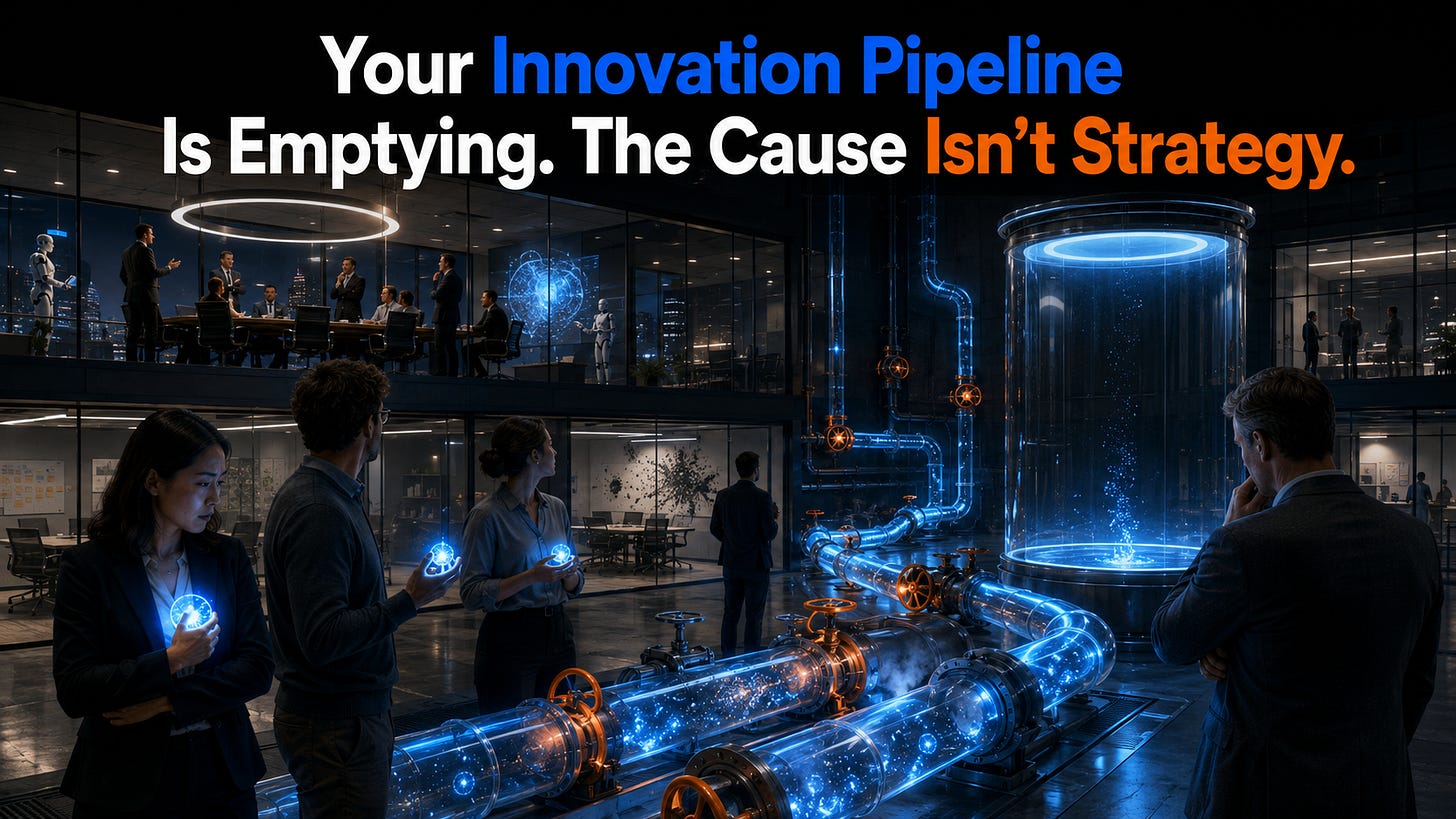
Emtrain's analysis of 48 million employee sentiment responses contains a finding that boards are filing under HR risk when they should be filing it under competitive strategy: every indicator tied to psychological safety declined in the past year. The largest single drop — 9.89% in healthy responses around workplace conflict — marks the steepest year-over-year decline in the dataset.
The timing is the problem. Organizations need breakthrough thinking most precisely at the moment the conditions for it are deteriorating fastest. Workers who worry their role might be automated are the least likely to volunteer the ideas that could accelerate that process.
Why it matters: The silence in your organization isn't compliance — it's your pipeline emptying in real time. That's not a culture problem to route to HR. It's a growth problem to own at the top.
New Data: AI Surveillance Hits Hardest on the Employees Built to Handle It
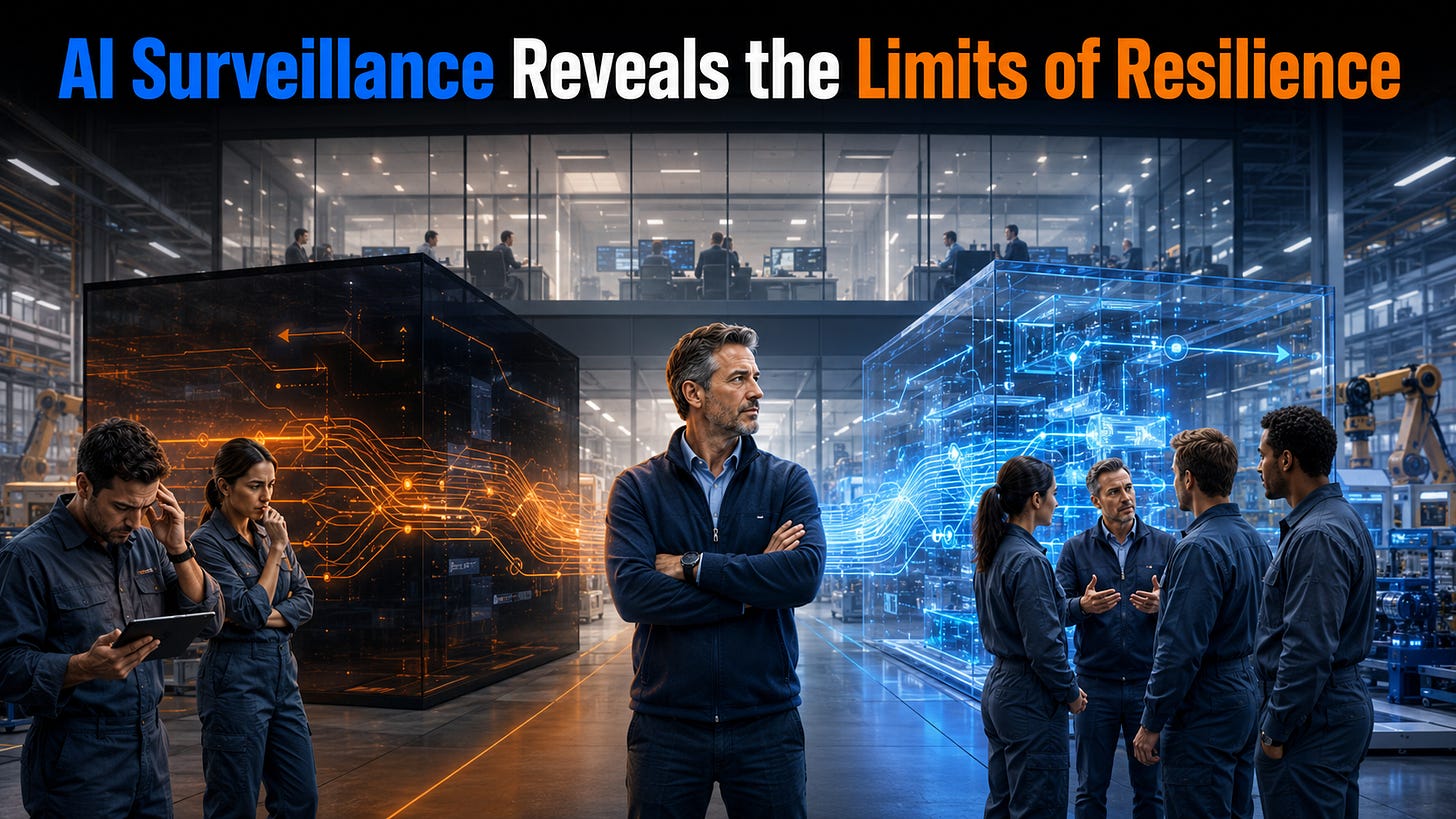
A peer-reviewed study published in Frontiers in Psychology found that under AI-based surveillance, employee resilience intensified psychological distress rather than softening it. Resilient people are engaged, attentive, and invested in mastering their environment. Put them under opaque algorithmic monitoring and that same engagement turns against them.
What actually reduced distress wasn't psychological toughness. It was AI-awareness: when employees understood the purpose of the monitoring system and the logic behind its outputs, distress fell. Transparency, not resilience, was the protective factor.
Why it matters: If you're deploying AI that observes how your people work, you can't lean on their resilience to absorb the friction. Explain what the system does and why before you turn it on.
Four Funding Rounds. $188 Billion. One Zip Code.
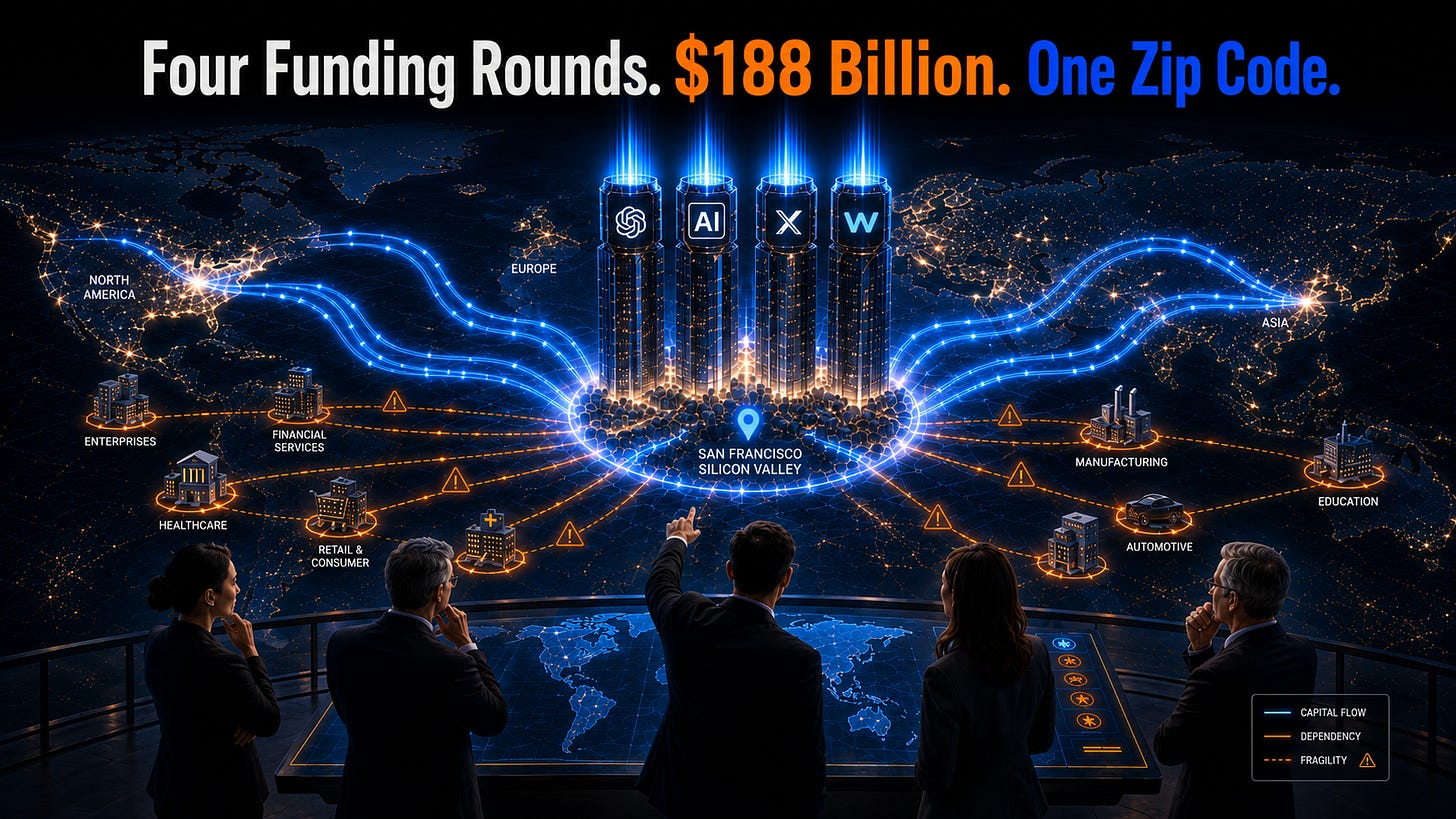
In the first quarter of 2026, global venture funding crossed $300 billion — and four rounds accounted for $188 billion of it. OpenAI raised $122 billion, Anthropic $30 billion, xAI $20 billion, and Waymo $16 billion. All four closed within driving distance of each other in the Bay Area, pulling in 65% of all global venture capital for the quarter.
The infrastructure your AI strategy depends on — the foundation models, the compute, the tooling — is being shaped by a handful of firms now funded at sovereign-wealth scale. Concentration at this scale also creates a specific kind of fragility.
Why it matters: Your AI dependencies may be more concentrated than your risk register admits. Map which of your critical capabilities trace back to one or two of these mega-funded labs.