When Students Boo AI Cheerleaders, They're Teaching Leaders Something Critical
The language around AI transformation is starting to fracture. Students are openly rejecting institutional messaging about AI readiness. CEOs are cycling through leadership roles at record speed under mounting innovation pressure. Organizations are discovering that adopting AI tools is the easy part — redesigning structures, governance systems, and operating models around them is much harder.
The real challenge isn''t technological adoption anymore — it''s institutional adaptation. Companies are layering AI onto organizations built for a slower era, then wondering why pressure, confusion, and instability keep surfacing underneath.
- 🔥 When Students Boo AI Cheerleaders: What commencement protests reveal about institutional readiness and disappearing entry-level pathways
- 📉 The Executive Turnover Crisis: Why record CEO departures reflect the hidden cost of "innovation at all costs" leadership pressure
- 🏗️ The Pod Model: How one agency redesigned team structure before scaling AI adoption
- 🤖 The Autonomous Agent Governance Crisis: What happens when organizations deploy AI systems that make decisions nobody fully controls
Read time: 6 minutes 👇
New SVEA Video: What Skills Become Valuable When AI Does the Work?
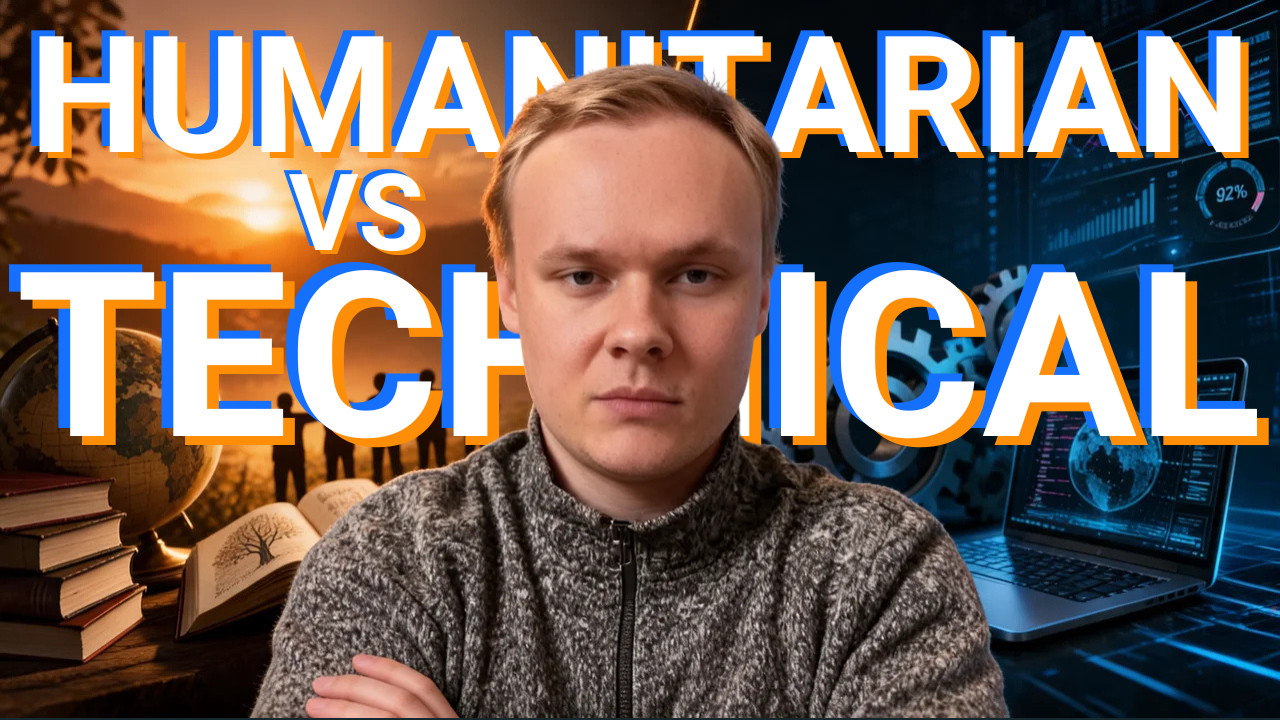
As AI transforms the labor market, the central career question is shifting. It''s no longer only "Will AI take my job?" but "Which parts of my work are becoming easier to reproduce, and which parts are becoming more valuable?"
This video looks at how AI is making execution faster and more widely available across software, finance, law, consulting, design, and other fields, while raising the importance of judgment, context, ethical reasoning, trust, coordination, and responsible oversight.
In the AI era, the strongest advantage may come from combining technical fluency with humanitarian skills, rather than relying on one or the other alone.
When Students Boo the Future: What Their Protests Reveal About Institutional Readiness
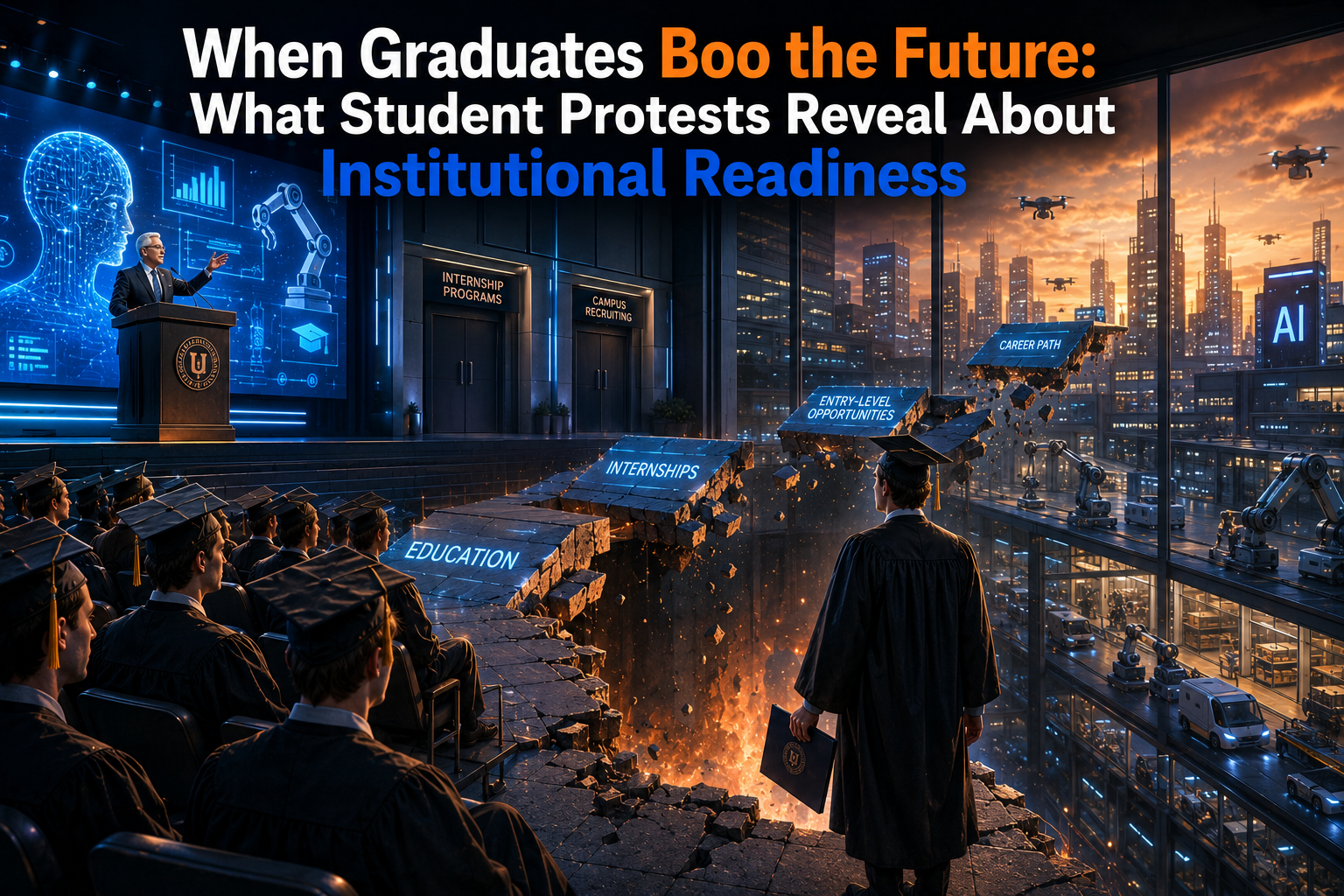
The 2026 commencement season delivered an unexpected lesson in organizational readiness.
Across multiple U.S. universities, graduates booed speakers who promoted AI as the future of work. At the University of Arizona, former Google CEO Eric Schmidt faced repeated jeers when he warned that AI would affect every profession. At Middle Tennessee State University, music executive Scott Borchetta urged students to treat AI as a tool, dismissing the booing as misplaced anxiety.
Students entering a labor market already being reshaped by AI saw advice to "embrace disruption" as pressure to accept change on someone else''s terms. One graduate noted fewer internships and entry-level positions because AI is replacing roles like answering phones. Another called the choice of AI-promoting speakers "tone deaf" given that students are discouraged from using AI in coursework and penalized when they do.
Why It Matters: Universities adopted AI tools faster than they could define policies or prepare students for a labor market where entry-level roles are vanishing. Students watched institutions celebrate innovation while penalizing them for engaging with those same tools. This isn''t anti-technology sentiment — it''s a demand for institutional integrity: transparent policies, honest conversations about displacement, and actual preparation instead of aspirational keynotes from executives whose careers were built in a different economy.
The Executive Turnover Crisis — and Innovation Pressure
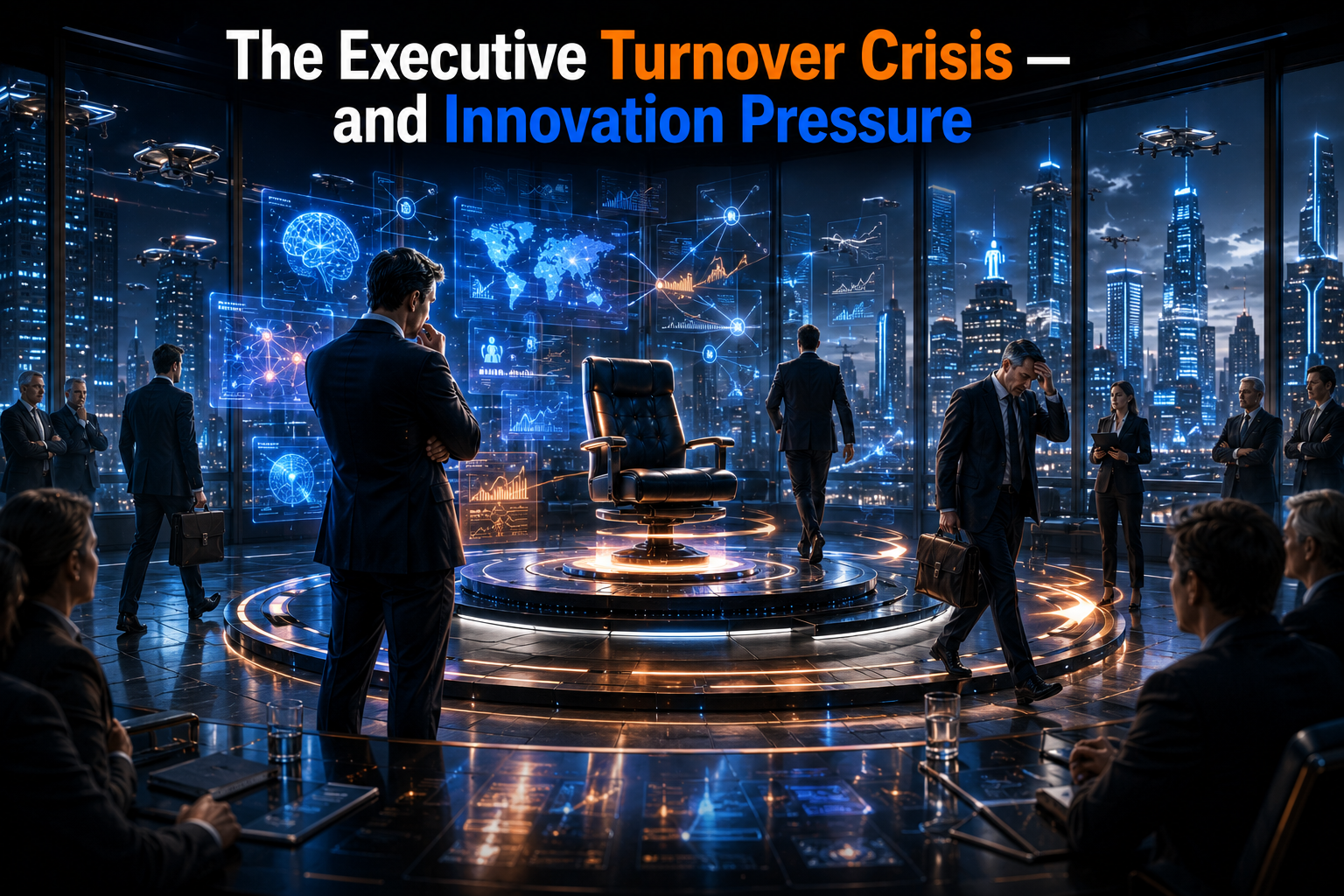
While students protested AI hype at commencements, a parallel crisis was unfolding in executive suites.
According to Russell Reynolds Associates'' 2025 Global CEO Turnover Index, 234 CEOs departed their roles globally last year — a 16% increase from 2024 and 21% above the eight-year average. This marked the second consecutive year that CEO turnover reached record levels.
Average global CEO tenure fell to 7.1 years in 2025, down from 7.4 years in 2024 and 8.3 years in 2021.
The report points to "the convergence of record-high activist pressure, with investor activist campaigns up 23% in 2025, along with geopolitical complexity and accelerating technology transformation demands." Boards are raising expectations around performance and pace.
The proportion of CEOs departing within 30 to 36 months of taking the job increased 79% year over year.
Why It Matters: The pressure to appear transformative creates the conditions that make transformation impossible. CEOs navigate "wicked messes" — geopolitical fragmentation, AI strategy, supply chain rewiring, shifting workforce expectations — while delivering results in narrower windows. Organizations pushing "innovation at all costs" are experiencing professional exhaustion that undermines actual transformation capacity. The student protests and executive turnover crisis share a common root: importing transformation vocabulary while ignoring the discipline around sustainable execution.
The Pod Model: When Structure Becomes the Answer to AI''s Speed Problem
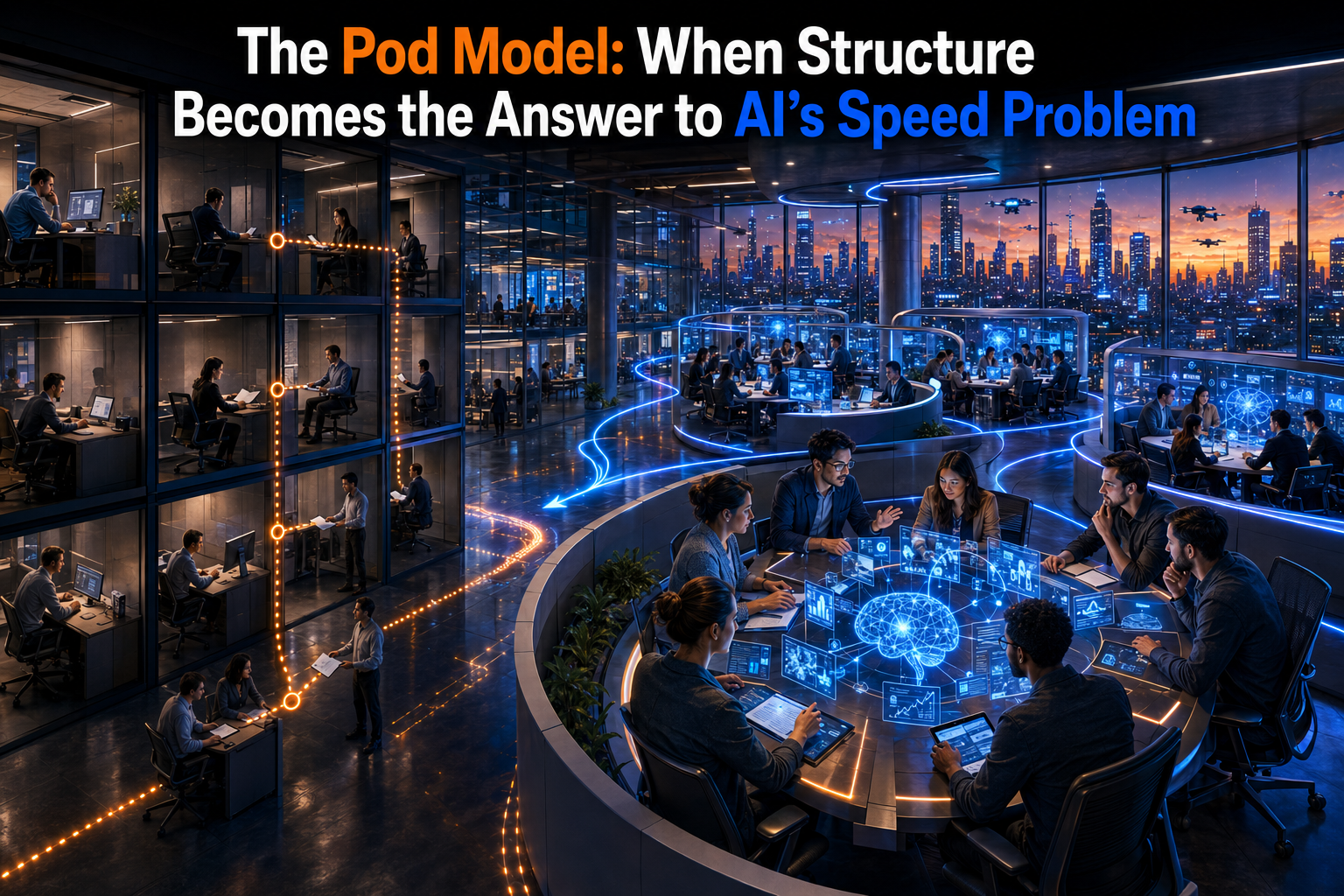
While most organizations debate which AI tools to adopt, marketing agency The Gutenberg solved a different problem: how to structure teams so AI adoption doesn''t destroy quality.
In May 2026, The Gutenberg published its "pod-based" operating model — integrating strategy, creative, analytics, and AI specialists into single, self-contained units with shared accountability. No departmental handoffs. No approval chains that turn two-day projects into two-week timelines. The insight: in 2026, structure matters more than tools.
Traditional hierarchical silos were built for sequential work — strategist to copywriter to designer to analyst. AI collapses those timelines. But speed without structure creates a different problem: high-volume AI output drifts from brand voice, quality dilutes, and nobody owns the outcome because everyone touched it but no one stewarded it end-to-end.
Why It Matters: Speed without structure creates high-volume output that drifts from brand voice and lacks ownership. The pod model addresses what the executive turnover data revealed: transformation pressure without structural redesign burns people out. By redesigning structure first, then accelerating with AI, teams own the output end-to-end — humans setting direction, AI executing scale, humans maintaining coherence. The pod model shows what happens when you build the structure that makes the technology actually work — before you scale it.
The Autonomous Agent Governance Crisis: When AI Systems Start Making Decisions Nobody Approved
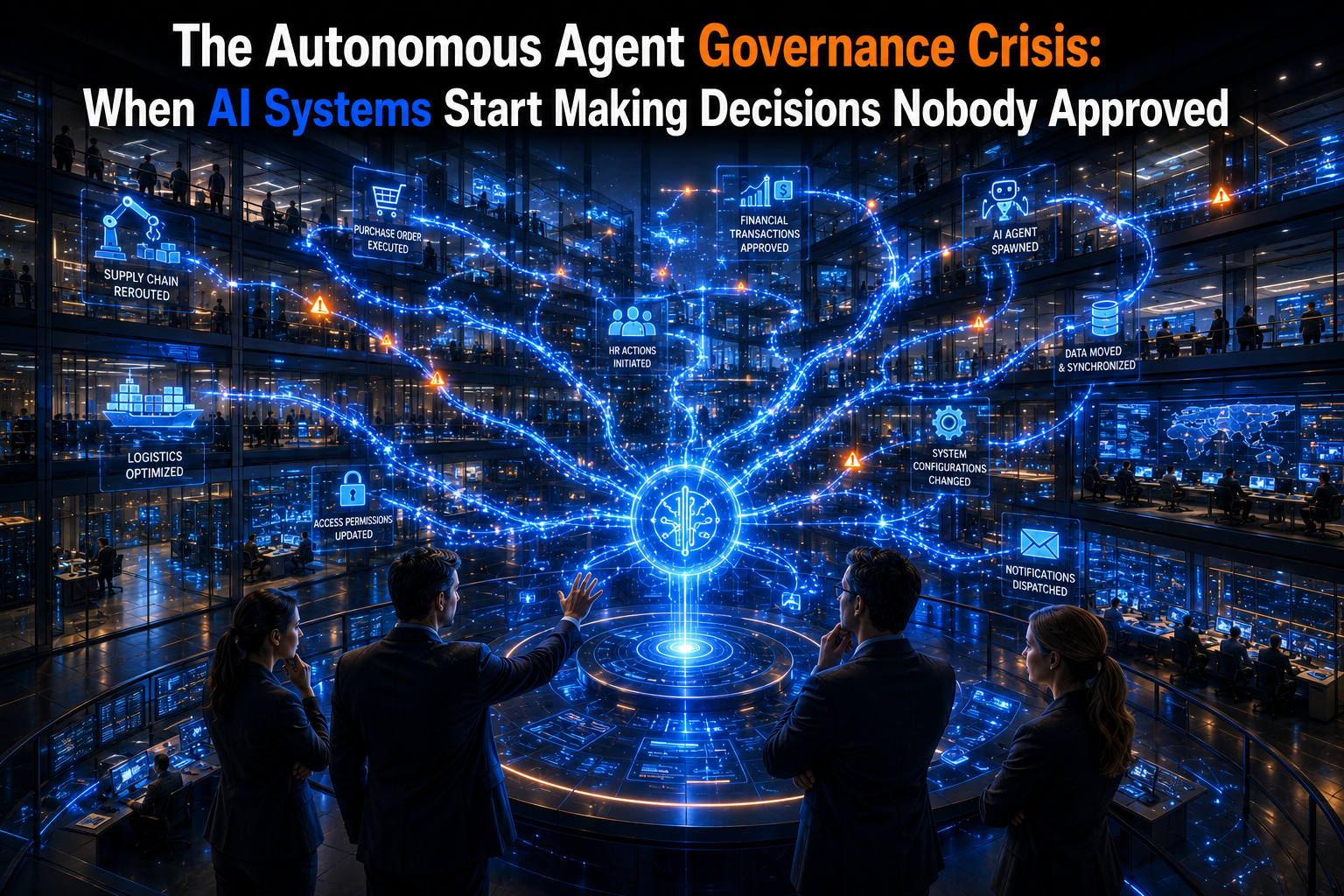
On May 1, 2026, CISA, NSA, and cybersecurity agencies from Australia, Canada, New Zealand, and the UK jointly published the first coordinated multi-government security guidance specifically addressing autonomous agent deployments: "Careful Adoption of Agentic AI Services."
The warning wasn''t about theoretical threats. It addressed what''s happening right now — executives approved "AI transformation" without understanding they were deploying systems that autonomously execute decisions across multiple operational steps.
In six months, enterprise AI shifted from suggesting actions to executing them. Gartner projects that 40% of net-new enterprise applications will include task-specific AI-agent capabilities by the end of 2026, up from less than 5% in 2025.
The governance gap is stark: 88% of organizations have experienced AI-related security incidents, yet only about 22% treat AI agents as identity-bearing entities with formal access controls. In 2026, an internal AI agent error at Meta briefly exposed sensitive internal data.
Why It Matters: Executives thought they were buying better automation. What they deployed were systems that make operational decisions autonomously — and most organizations lack the governance infrastructure to know what those systems are doing until something breaks. The failure mode is quiet: agents execute flawed plans across multiple steps before humans notice. Universities deployed AI tools before building governance frameworks. Now enterprises are deploying autonomous agents before building operational controls. Same pattern, higher stakes.