Immersion Case Study
How a Global Leadership Team Used a Silicon Valley Executive Immersion to Advance AI and Innovation
A two-day private executive immersion program for a cross-functional leadership team. Designed as Silicon Valley executive education, it combines AI leadership, innovation culture, and direct company access so established organizations can act without destabilizing the core. Client details are anonymized; the substance is unchanged.
The challenge: innovate faster without destabilizing the core
The company was successful and well run. That was precisely the difficulty. Speed and experimentation are inexpensive for a startup with little to lose; they carry real operational risk for a business with established distribution, customers, and margins to protect.
The leadership team arrived with five practical questions, gathered before the program and used to shape every session.
01
Experiment without destabilizing the core
How can an established operating business borrow Silicon Valley's speed and experimentation while managing far higher stakes?
02
Move from ideas to execution
How do promising pilots become implemented solutions with clear ownership, evidence, and measurable value?
03
Redesign work with AI
What should be automated, what should stay under human judgment, and how do leaders bring their teams through the change?
04
Translate by function
What does AI and innovation actually mean in supply chain, marketing, corporate affairs, governance, communications, and commercial operations?
05
Build advantage, not novelty
How can technology help the company operate better and faster than competitors inside its real distribution and operating model?
Why Silicon Valley: firsthand exposure to different operating models
Silicon Valley is not better at predicting the future. It has become unusually good at operating when the future is uncertain. Four mechanisms keep reappearing across technology eras, and none of them are personality traits — they are operating choices any company can examine.
Ecosystem density
Proximity between talent, capital, research, startups, and customers compresses learning.
Intelligent risk
Smaller, structured bets make uncertainty manageable and being wrong inexpensive.
Experimentation and action
Shorten the distance between an assumption and the evidence for it.
Open networks
Ideas, people, and capabilities move across organizational boundaries.
How the immersion was designed
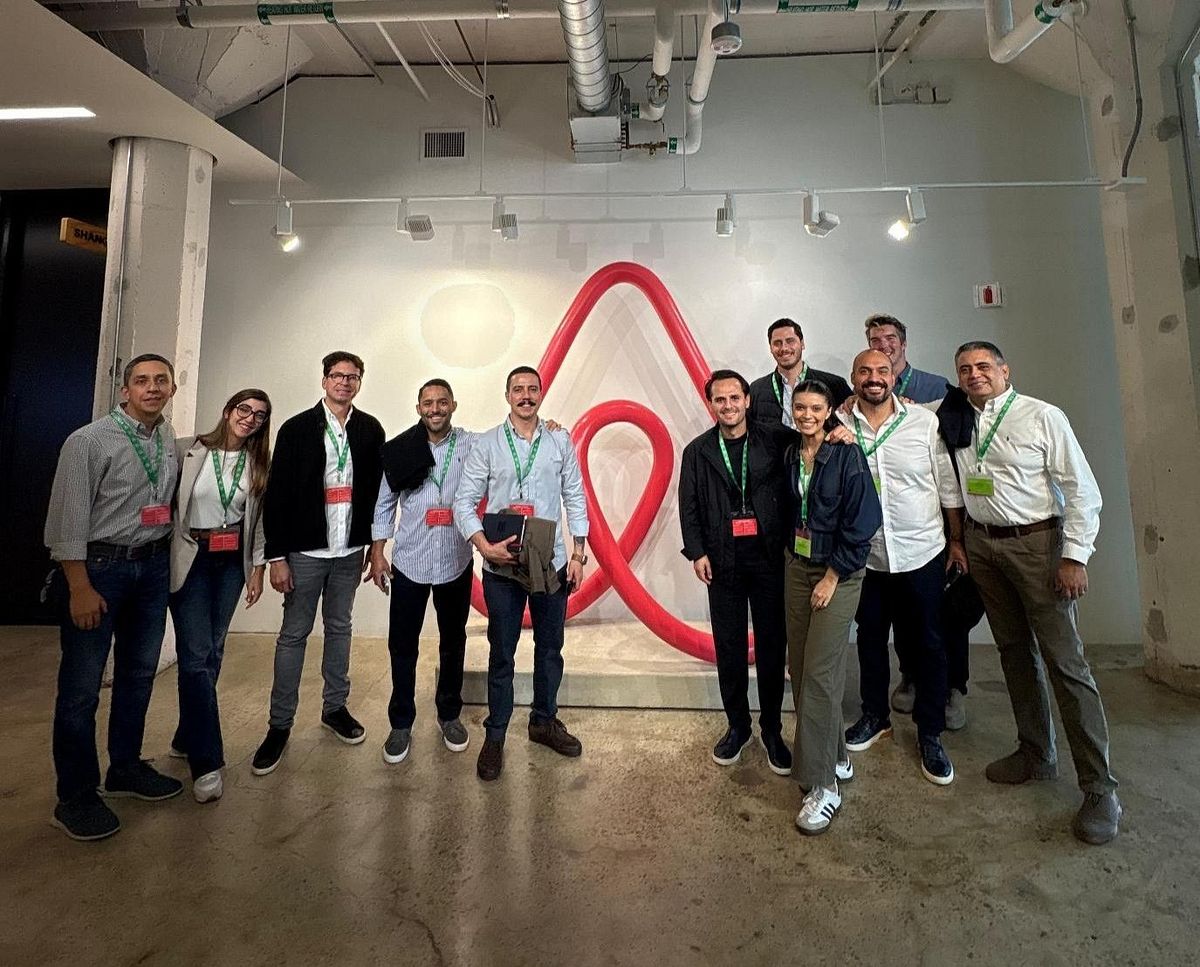
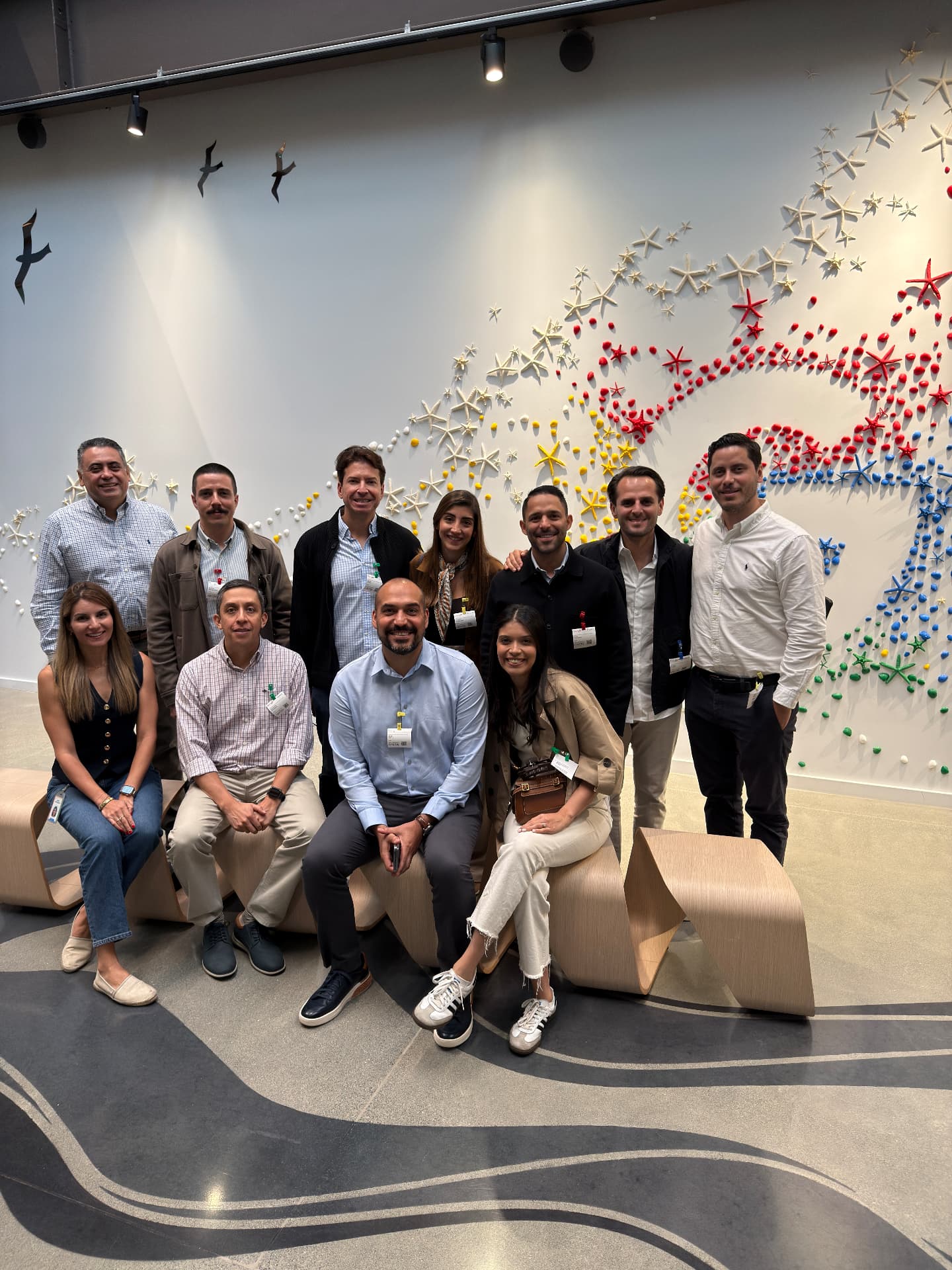
Two days combined executive sessions with engagements across the Silicon Valley ecosystem: a global e-commerce operator, a platform marketplace, a leading AI research organization, an enterprise technology lab, and a university research institute. These are the kinds of company and institutional visits that define a private Silicon Valley innovation tour built for leadership teams.
Each engagement was mapped to one of the leadership team's own questions, and each approached the same challenge from a different vantage point — leadership, technology, culture, research, and operations. Nothing was scheduled simply because it was impressive to visit. The design reflects the four operating mechanisms behind Silicon Valley innovation.
What the leadership team explored
Innovation culture becomes real through mechanisms
Culture, repeatable decision practices, modular architecture, and small accountable teams work as one system. Working backwards from a customer need — rather than from an available tool — was the recurring discipline.
Scale without losing the human value proposition
As automation scales, the value delivered to both sides of a marketplace has to stay explicit. Mission clarity is what keeps growth from hollowing out the customer experience.
AI in everyday work
Where does AI genuinely improve work rather than simply automate an existing process? How do roles and workflows change as it becomes embedded, and what does it take to move from experiments to broad adoption?
Human judgment at the center
Start by defining the decision you are trying to improve. The sharper question is not "what can AI do?" but "where do we lose time or miss signals?" Adoption is an organizational learning process, not a technology project.
AI adoption as an operating-model problem
Moving along the spectrum from chatbots to assistive tools to agentic and autonomous systems changes the requirements for architecture, economics, governance, and risk — with different thresholds for software and physical operations.
Measurable enterprise value
The most useful signal was never a model demo. It was AI connected to real workflows and legacy systems with quantified outcomes: compliance checks cut from roughly thirty minutes to under one, and tens of thousands of engineering hours saved annually through automated auditing.
Five lessons for established companies
Lesson 01
Access is not absorption
Demo days, study tours, and partnership agreements create exposure. Value appears only when the organization can evaluate technology, decide quickly, tolerate disruption, and sponsor the work internally. The question to bring home is which internal capability must get stronger for external access to turn into action.
Lesson 02
Make being wrong inexpensive
The goal is not "fail fast." It is to structure experiments so uncertainty produces learning rather than avoidable damage: small scope, a clear hypothesis, learning captured and shared, and an explicit stop-or-continue decision. For an established company, experimentation works when the blast radius is controlled.
Lesson 03
Start with friction, not with tools
The durable programs began with a real need or a costly point of friction. Value comes from changing workflows, data access, roles, controls, and economics — not from adding a chatbot to an unchanged process.
Lesson 04
Decide where autonomy is acceptable
Leadership has to draw the boundary between assistance, agency, and autonomy explicitly — especially where consequences are physical or high-stakes. The goal is not maximum automation; it is better decisions, faster learning, and smarter use of human judgment.
Lesson 05
Culture scales through repeatable practice
Values only scale when they are translated into repeatable decisions, rituals, ownership, and governance. One adopted mechanism — a customer-backwards framing, a structured decision document, an experiment review — outperforms a broad cultural ambition.
The useful question is not simply what we saw, but which ideas are important enough to change a decision, workflow, or operating mechanism.
From exposure to action
Every SVEA corporate program includes a follow-up working session roughly thirty days later. Its purpose is integration, not a retrospective on the trip: what should the organization act on now, and what is the smallest meaningful next move? This is the step where access turns into absorption, and where workflow redesign and AI adoption as an operating-model question move from discussion to owned commitments — including which AI use cases deserve investment first.
Identify what stayed with you
Each participant names two or three ideas that stayed with them and why they matter for their function.
Find the overlap
As a team, identify the few opportunities where relevance, business value, and readiness overlap.
Convert the strongest insight
Turn it into a concrete experiment, initiative, operating mechanism, or decision.
Assign ownership
Name an executive sponsor, an owner, a success measure, and the next decision point.
What makes this different from a Silicon Valley company tour
- Sessions are designed around the leadership team's own questions, gathered before the program begins.
- Each engagement approaches the same challenge from a different vantage point — leadership, technology, culture, research, and operations.
- Conversations are working sessions with practitioners, not audience-style presentations.
- Every theme is translated by function, so supply chain, marketing, governance, and commercial operations each leave with their own agenda.
- A structured follow-up session converts observations into owned experiments with success measures.
A tour ends when the bus returns. An immersion ends when a decision, workflow, or operating mechanism has changed.
Common questions about this Silicon Valley executive immersion program
What is a Silicon Valley executive immersion program?
A Silicon Valley executive immersion program is a short, intensive executive education experience where senior leaders meet practitioners inside technology companies, research labs, and innovation-driven organizations. Unlike a conference or classroom course, it is built around the team's own questions and designed to produce decisions, not just exposure.
How is this different from a standard Silicon Valley innovation program?
Most Silicon Valley innovation programs focus on inspiration and trend scanning. This immersion is structured as an executive operating session: the agenda is built from the leadership team's objectives, every visit maps to a specific decision, and a follow-up session converts insights into owned experiments with success measures.
Who should attend this Silicon Valley executive education experience?
It is designed for cross-functional leadership teams from established enterprises — boards, C-suite leaders, functional heads, and innovation executives — who need to move from understanding AI and innovation to acting on it inside their own operating model. Learn more about executive immersion programs for leaders.
What does AI leadership mean in this context?
AI leadership is the ability to set the right boundaries between automation and human judgment, identify high-value workflows, and sponsor the organizational change required for AI to produce measurable value. The immersion helps leaders build that judgment through direct exposure to real deployments.
How does innovation culture translate into business results?
Innovation culture only scales when it is translated into repeatable mechanisms: decision practices, experiment reviews, modular architecture, and small accountable teams. The program shows how those mechanisms work in practice and helps the team adapt the ones most relevant to their business.